Stranded
At 2am, on a cold night in January 2024, I found myself shivering in biting minus temperatures stranded at Calais port. “Parlez-vous anglais?” I said in my best French, teeth chattering. Phew, I’d found another person. “Yeah, I speak English” he replied in a strong Irish accent. His name was John. We had both booked onto a ludicrously cheap coach from London to Calais (£15 return) with Bla Bla Car’s bus company, but after an 8 hour delay, here we were in the middle of the night. Luckily for me, John was a pick-up truck driver. After trying and failing to get a shared taxi together into town (it was an unsafe 1hr+ walk away), he called his colleague (also Irish, also called John) to come and pick us up. John and John went out of their way to drive me to my accommodation in their 40 tonne pick-up truck, and told me about how refugee’s used to form human chains and make fires to block them driving through this part of Calais in 2014-16, while other refugees tried to sneak into the back of trucks in desperation. “It was dangerous for us, we could get in big trouble” they told me (referring to the fact that they would have to pay £2000 per asylum seeker if anybody managed to sneak into their vehicle without them noticing, and to the sometimes tense and desperate situations they found themselves driving through). John and John seemed like decent guys. It felt unfair that they were being pitted against asylum seekers, when they were just trying to do their job. They felt let down by the government. Reluctantly finding themselves on the frontline of a global crisis and in the eye of a storm.
I was about to spend a month learning about why these refugees were so desperate.
Asylum Seekers
I had come to Calais to volunteer with Asylum Seekers fleeing persecution in their own countries, with Care 4 Calais.
I found people, regular human beings like you or I, who had faced so much adversity and had nowhere to go. They told me they had travelled for months and sometimes years, in search of safety. Many people told me they had tried settling in other places but encountered violence or mistreatment along the way, and Calais was the final stop. Others told me they had relatives or friends they’d set their hearts on meeting up with in the UK. Here in Calais, they were sleeping rough in freezing temperatures, and subject to regular raids and “evictions” by the infamous CRS police (funded by the British taxpayer as part of a policy to make it a “hostile environment”. In reality, this aggression is driving more people to risk their lives crossing the channel on small boats sooner). They felt let down by the world. But they still had hope, and it was palpable.
The work Care 4 Calais is doing is genuinely lifesaving in freezing cold January, and it also just helps to bring a little dignity and normality to people in awful situations not of their own making.
“People who are survivors of war, torture and trafficking, deserve to be treated with humanity and dignity. We are doing all we can to support them, but we are increasingly overwhelmed by the demand for humanitarian aid, and we need your help.” Care 4 Calais
The Work
I won’t go into too much detail here because Care 4 Calais have an excellent website with all the information you need if you’re thinking about volunteering yourself, and they are better placed to explain and answer questions than me!
In summary, everyday we spent the morning working in the warehouse, getting everything (mainly donated items) ready for distribution. The warehouse is BIG. I was really impressed with how organised Care 4 Calais is. They told me that some volunteers complain a little about how strict they are about following procedures down to a T, but I felt it was impressive that they were able to find a system that enabled them to really get things done on a large scale and do so much important work with such a turnover of workers. This is definitely not just an NGO that offers a ‘volunteer experience’, Care 4 Calais are out there doing important humanitarian work and volunteers will get some really good hands-on experience (There are just 4 full time members of staff based in Calais, and then a core group of long term volunteers, and many shorter term volunteers coming and going frequently). That said, you really don’t need to have any specific skills, anybody who cares and wants to help can. There’s a job for everyone. Care 4 Calais provide all the training you need, and people are lovely and so supportive!
Each afternoon we went out to different sites near to where refugees were sleeping rough, and distributed non-food items such as tents, coats, or warm shoes. After this we were responsible for a set of services including hot drinks, hair cutting, big rigs so people can charge their phones and call their loved ones, sewing and mending things, games, and my favourite, English teaching / conversation practice. Again, you can choose which jobs you do each day based on your skills and preferences. Sometimes things can change quickly as Care 4 Calais needs to respond to the situation as it unfolds. At the end of the day there is always a team debrief and a chance to ask any questions and reflect.
The Ups and the Downs
I am so glad I got the opportunity to volunteer with Care 4 Calais. I genuinely learnt so much, and met some really amazing humans, of all ages and from all walks of life. The longer you are there, the more you get to know the asylum seekers and staff, build strong relationships, and get to take on greater responsibility. But what is brilliant about Care 4 Calais’s model is that every volunteer gets to really see the results of all the work. You are on the frontline, getting to contribute to making a difference to peoples lives and survival, and this is real (and trust me the asylum seekers make as much difference to the volunteers lives. It goes both ways). But it is also HARD. In January it’s fooking freezing out there, it’s hard work, and I saw some really harrowing situations. Over the time I was there (just 1 month), 5 people including a 14 year old boy died trying to board a small boat to the UK in freezing temperatures, and 1 man died in the back of a lorry. It’s truly heartbreaking getting to know fellow human beings and witnessing them stuck in these situations. Rather than being rewarding, it can actually be very angering and confronting to really see how appalling the conditions are and how little there is anybody can do to change it. But it does feel purposeful. And if you volunteer with Care 4 Calais I promise you, you will laugh (a sense of humour goes a long way), create real meaningful bonds, and be encouraged by the warmth of the people you meet, both asylum seekers and other volunteers. And it beats sitting around watching the news feeling pissed off and helpless, right?
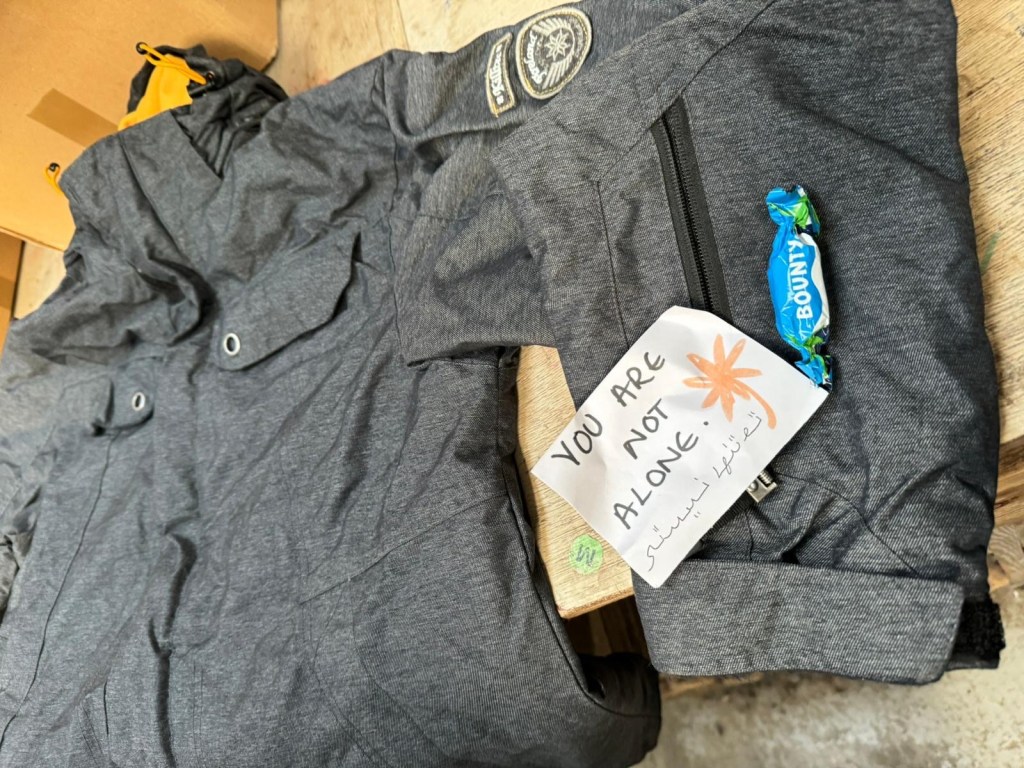
A heartwarming note and a snack, found in a donated coat. 
At the vigil for Abadeh Abd Rabbo, a 14-year-old teenager, Aysar Abd Rabou, a 26-year-old man (brothers), Mohammad Al Jbawi, an 18-year-old man, Ayham Alshouli, a 25-year-old man, and Ali Al Oklhat, a 26-year-old man, all Syrian nationals, are killed off the coast of Wimereux while attempting to cross the sea to the United Kingdom. 34 other people were rescued. Abadeh and Aysar were buried on 23 February in the Boulogne-sur-Mer cemetery. 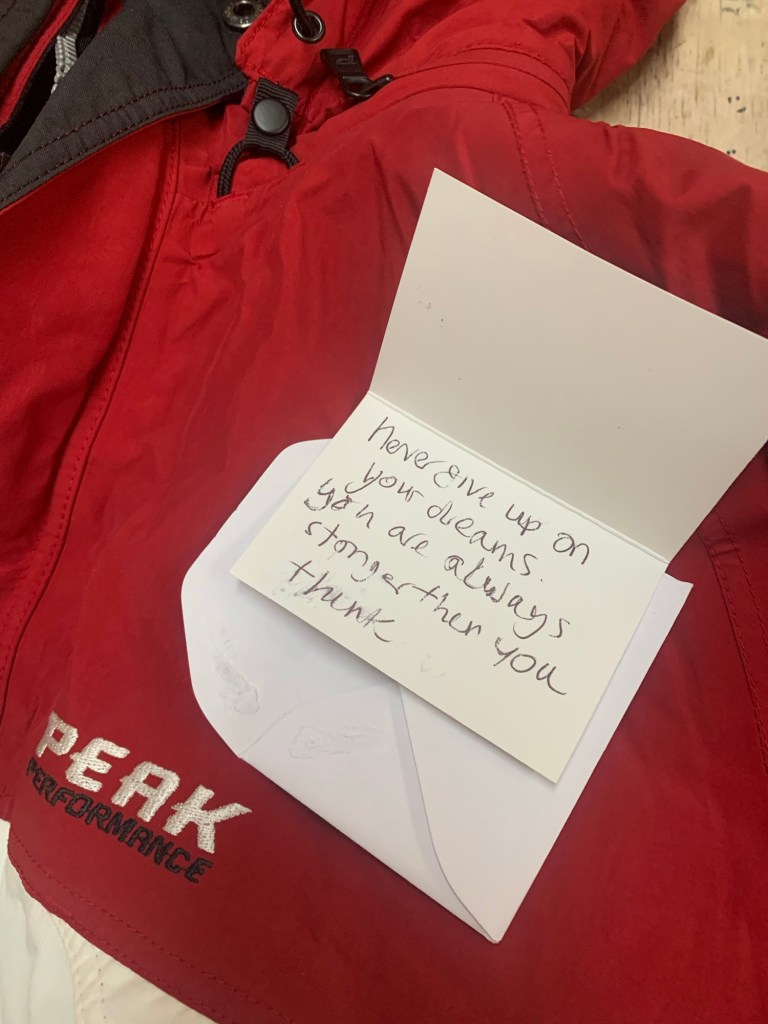
A kind note found inside the pocket of a donated coat. These notes brightened up our days as volunteers too! 
A thoughtful note found in the pocket of a donated coat. 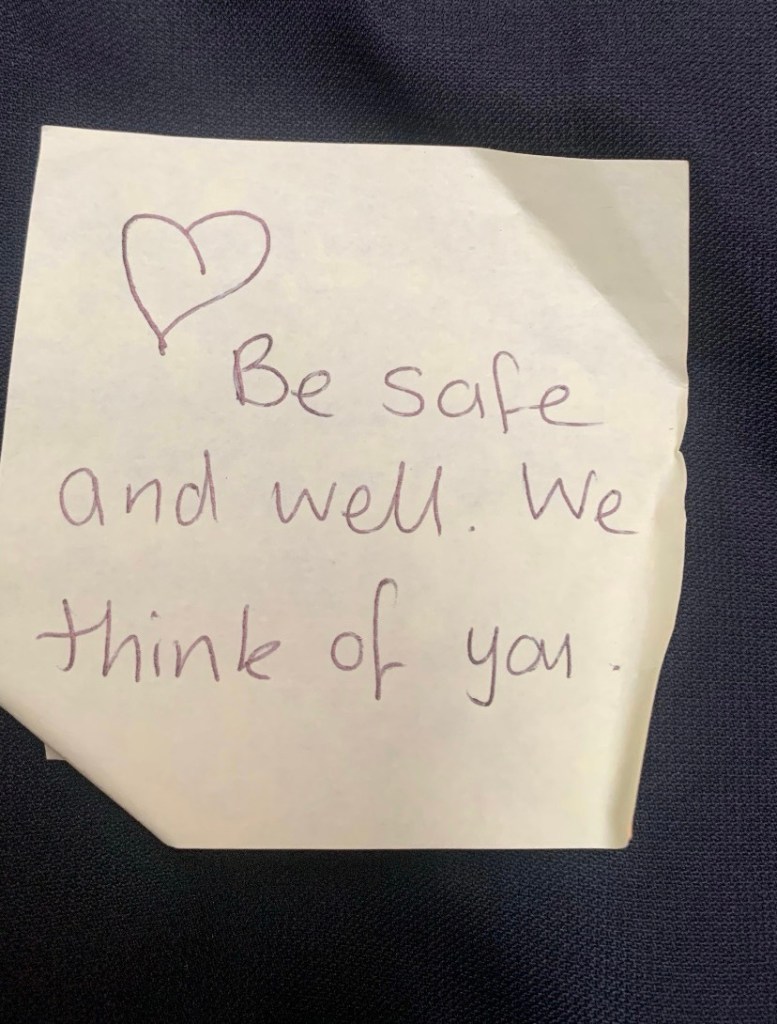
A note found inside the pocket of a donated coat.
“To us here it seems very much that any reduction in small boat crossings is being bought with old fashioned violence and intimidation towards Calais refugees. And that makes it clearer than ever that the only way of ever reducing them safely will be by introducing safer routes.
Until that happens, I am deeply sorry to say. we will continue to gather at vigils in the cold and dark in Calais, listening to laments for brothers and sisters and friends among the Calais refugees who sought only a safer and more normal life” – Imogen Hardman, Senior Operations Manager, Care 4 Calais.
Want to Donate?
Please check out this page first! Care 4 Calais reeeally need more donations. Since the jungle was closed, and Ukranians have been given safe passage to the UK, donations to Care 4 Calais to support all the refugees who are still stuck there have dropped considerably, but the need is still there! You can donate money, or items. However, please please check out this page on their website before donating any items, to see which items they actually need and can use. You can also sign up to be a ‘collection point’ or to collect and drive items to Calais.


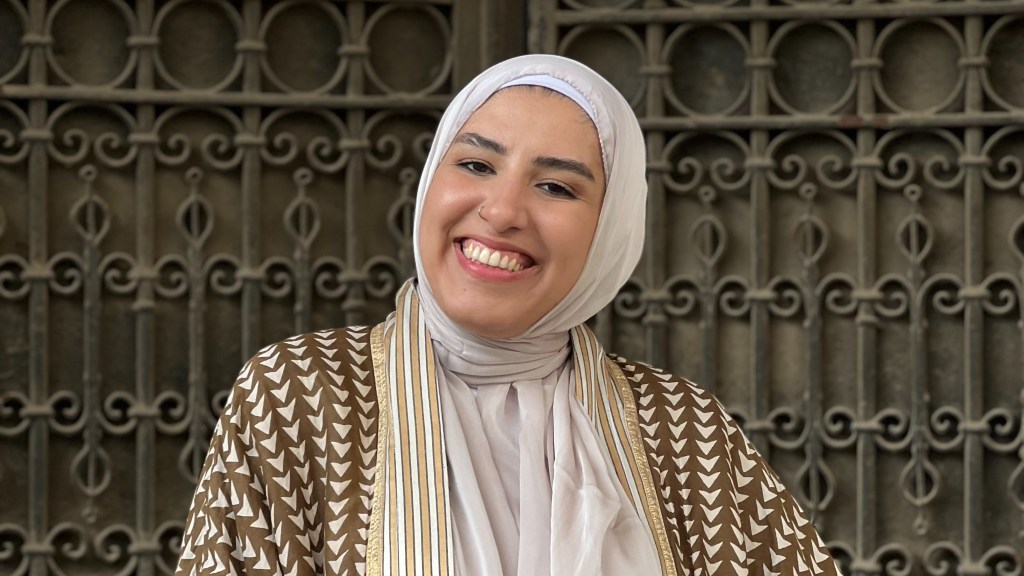



 The Beirut Bulbul.
Leave a comment