“My name is Mahmoud, and I am a political prisoner.
I am writing to you from a detention facility in Louisiana where I wake to cold mornings and spend long days bearing witness to the quiet injustices under way against a great many people precluded from the protections of the law.”
– Mahmoud Khalil, excerpt from a letter dictated from ICE detention, March 18, 2025

This is my friend Mahmoud Khalil. On March 8, he was taken by Immigration and Customs Enforcement (ICE) agents from his residential apartment on Columbia University campus in New York City. The agents did not give Mahmoud a reason for his arrest; nor did they read him his rights, or even have an arrest warrant. They did not pay any heed to the fact that Mahmoud has a greencard and is a lawful permanent US resident. Mahmoud’s wife Noor was with him at the time of his arrest. She was 8 months pregnant.
After 24 excruciating hours of Noor trying to get information, news trickled in that Mahmoud had been taken 1, 386 miles away. He was being held in the notorious LaSalle detention facility in Louisiana. Since then, we’ve watched from our screens in horror as our friend – kind, conscientious Mahmoud – has been cynically thrust into the eye of a political storm, and cast as a warning held up by Trumps White House.

Eye of the storm
“Who has the right to have rights? It is certainly not the humans crowded into the cells here. It isn’t the Senegalese man I met who has been deprived of his liberty for a year, his legal situation in limbo and his family an ocean away. It isn’t the 21-year-old detainee I met, who stepped foot in this country at age nine, only to be deported without so much as a hearing”
– Mahmoud Khalil, excerpt from a letter dictated from ICE detention, March 18, 2025
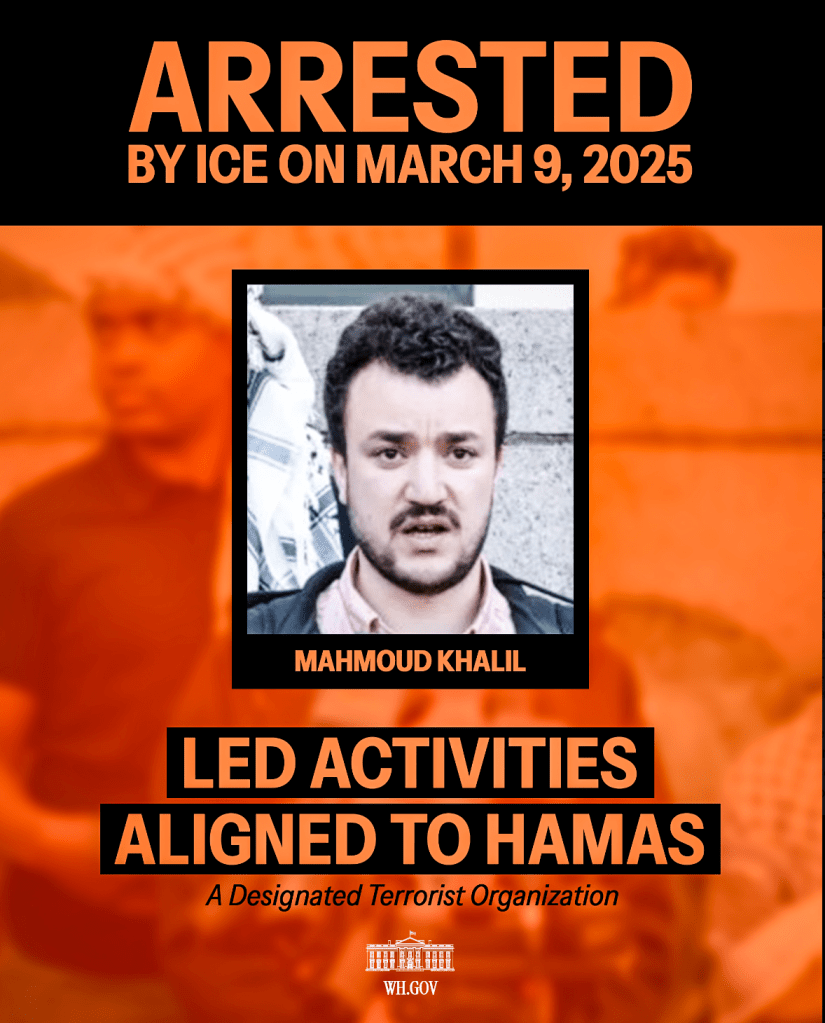
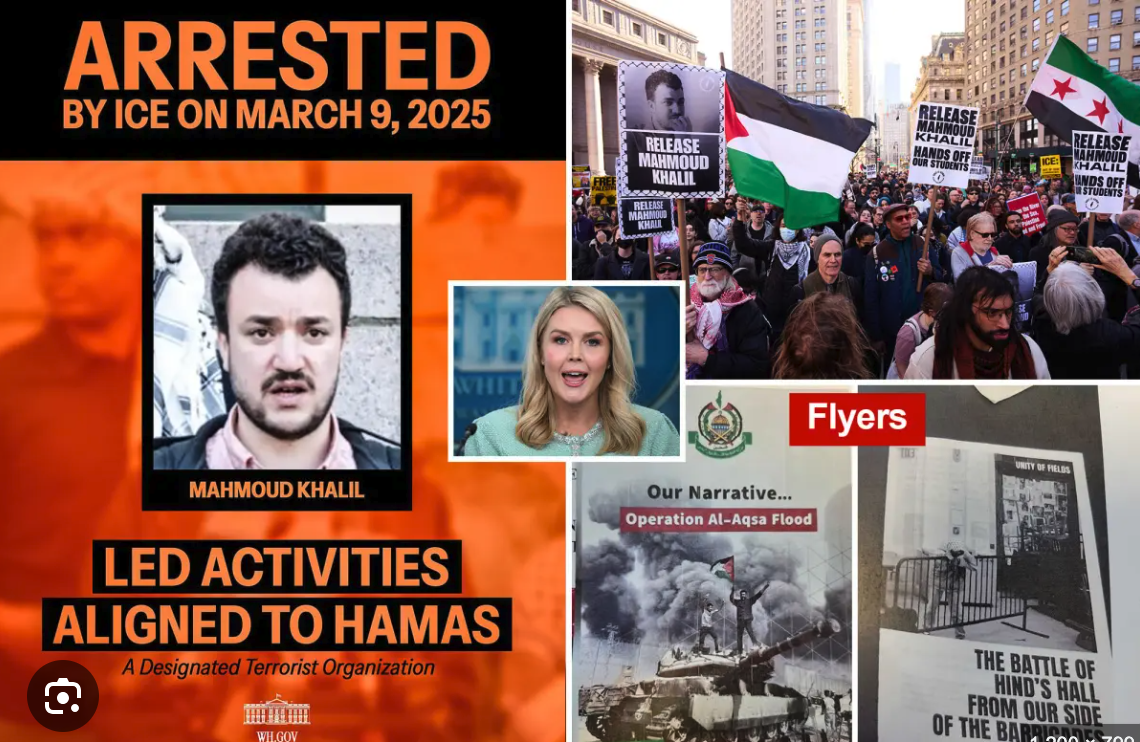
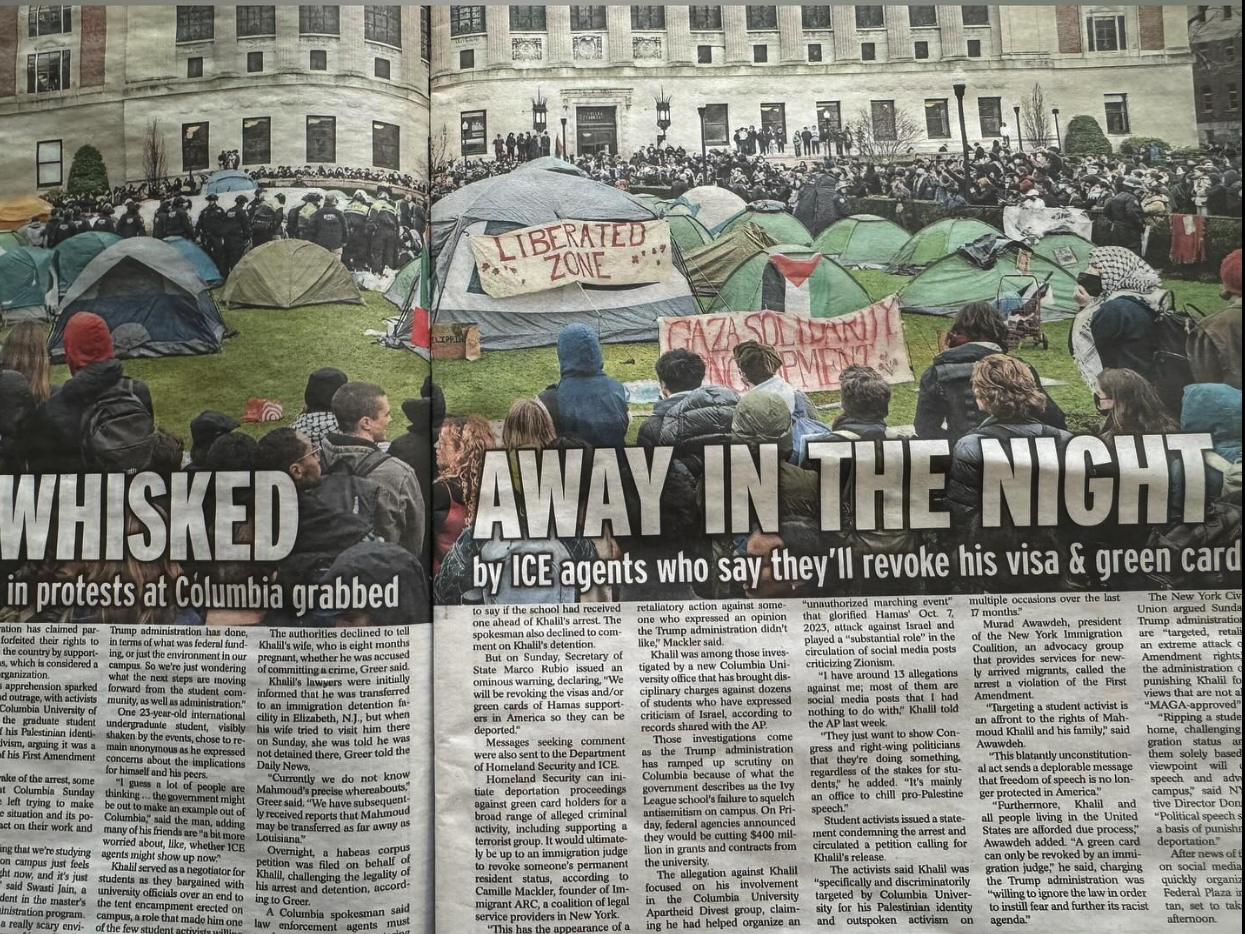
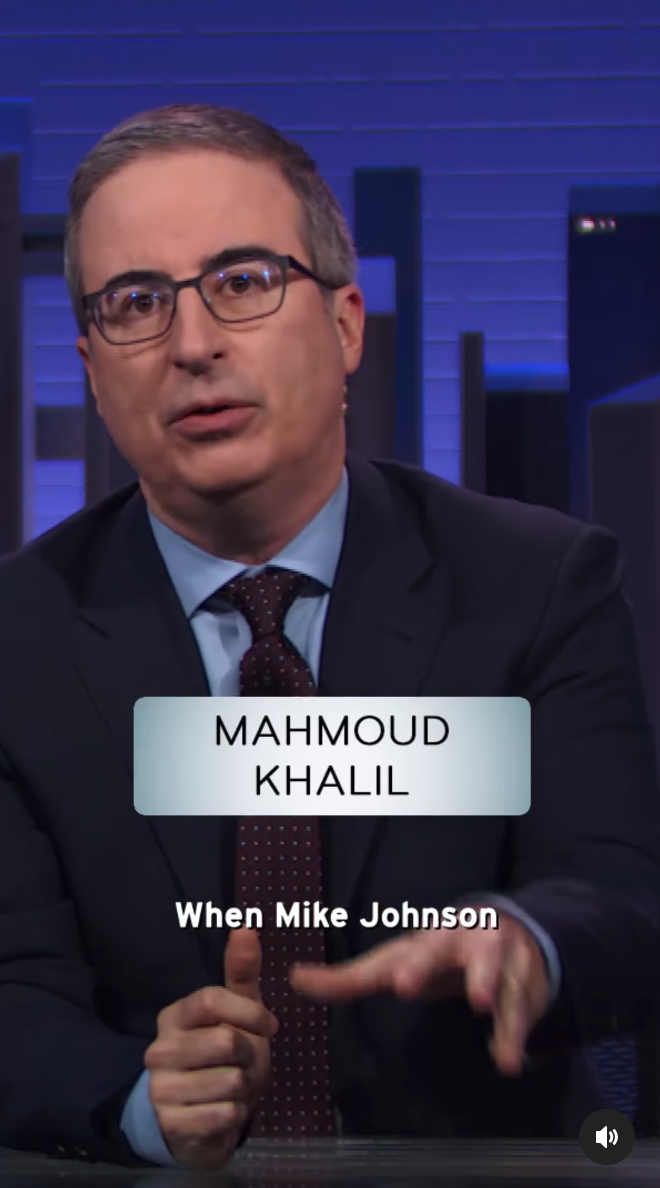
My husband and I first became aware of the fact Mahmoud had been illegally detained via social media on Sunday March 9th – the day after his arrest. We were stunned. A close mutual friend had spoken with Noor by phone and shared updates on how she and Mahmoud were coping. Over the next few days, Mahmoud became the unexpected center of a surreal media and political firestorm. It began with a tweet from Donald Trump and the Whitehouse. It was disorienting in its tone and absurdity. The Mahmoud we know is someone who cares deeply about human dignity and has consistently dedicated himself to serving others. At Columbia, he had taken on the role of lead negotiator with the university administration, advocating on behalf of students engaged in peaceful protest against the mass killing of civilians—men, women, and children. His goal was to ensure the protests remained safe, constructive, and principled. The portrayal of him as dangerous, in Trump’s Orwellian tweet, could not be further from the truth.
Many of the protestors Mahmoud supported were Jewish. He has publicly and repeatedly disavowed antisemitism, and he often speaks about how justice for Palestinians must go hand in hand with safety and freedom for Jews. For Mahmoud, a future free of oppression meant liberation for both peoples.
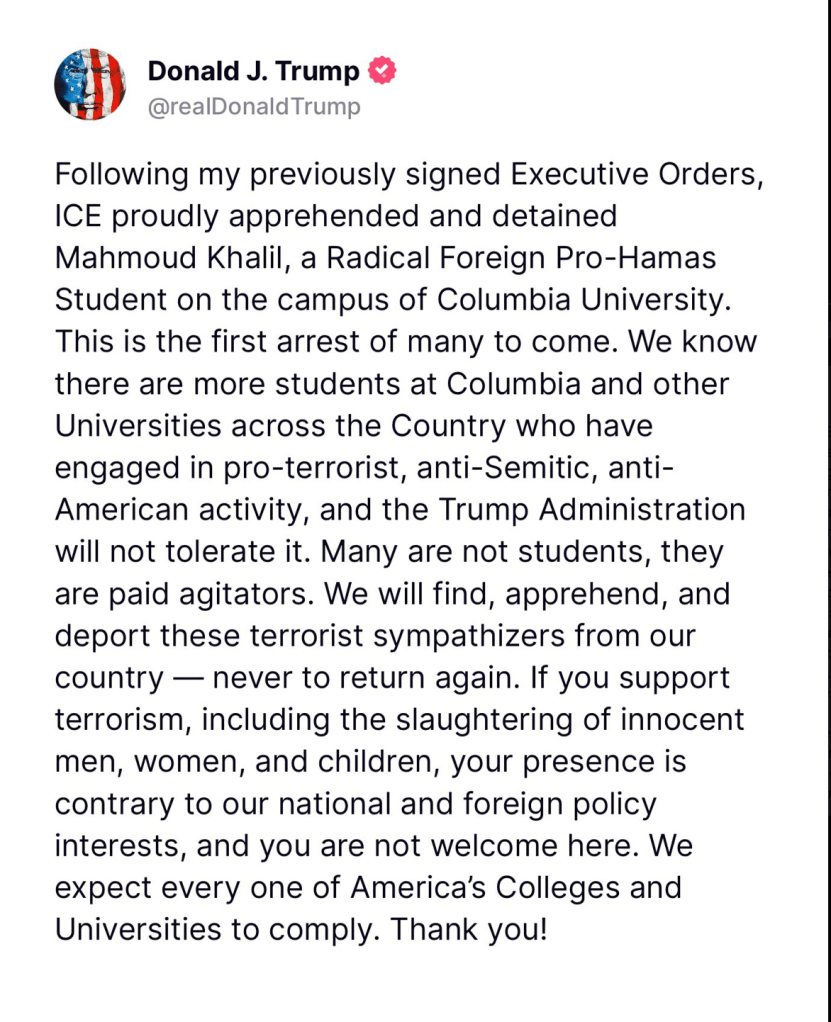
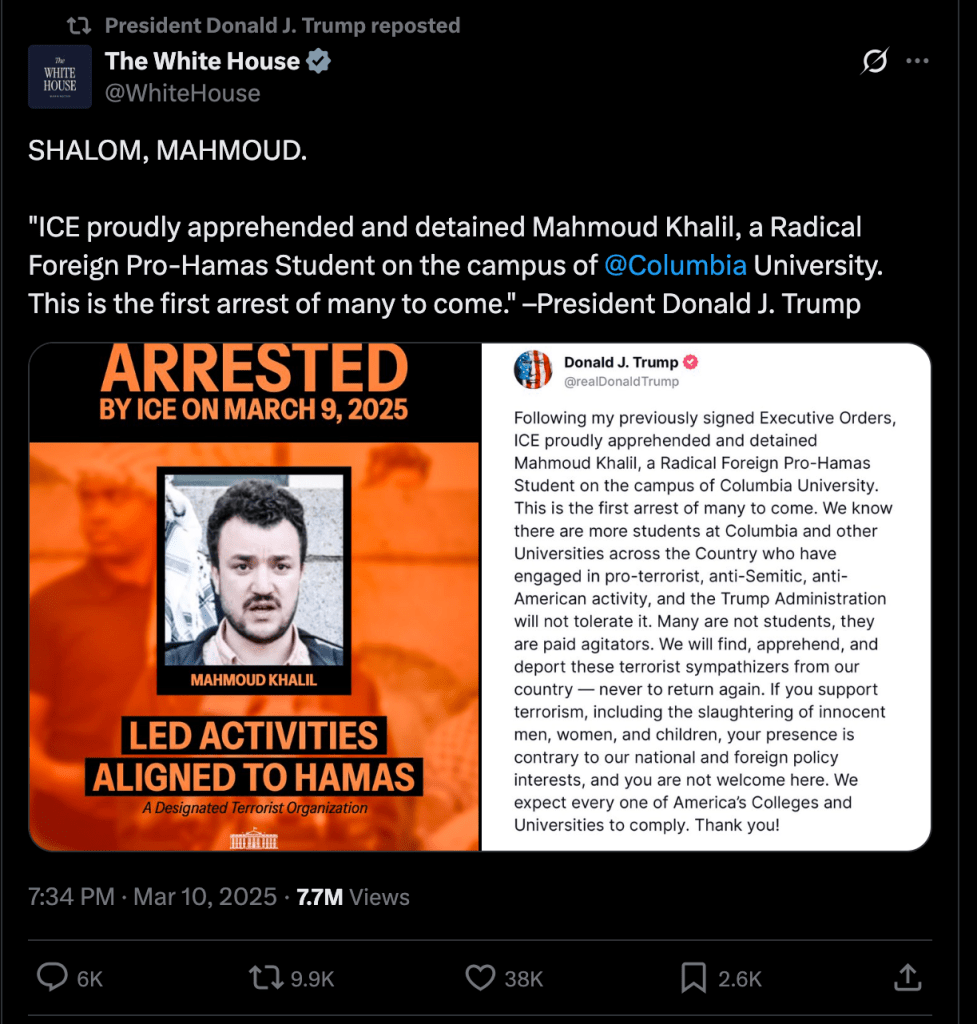
Far from having any association with Hamas, Mahmoud has served as the Chevening Scholarship Officer for Syria on behalf of the UK Government—a role that required a a security clearance process. In that capacity, he conducted hundreds of interviews to select outstanding Syrian youth for postgraduate study in the UK. He also volunteered and worked with Jusoor, an NGO dedicated to expanding educational access for Syrians, and provided support to the Palestinian Delegation at the United Nations Security Council—a body tasked with maintaining international peace and security.
To see peaceful protest and legitimate political advocacy conflated with terrorism is deeply troubling. It not only distorts the truth but also undermines serious and necessary efforts to combat antisemitism.
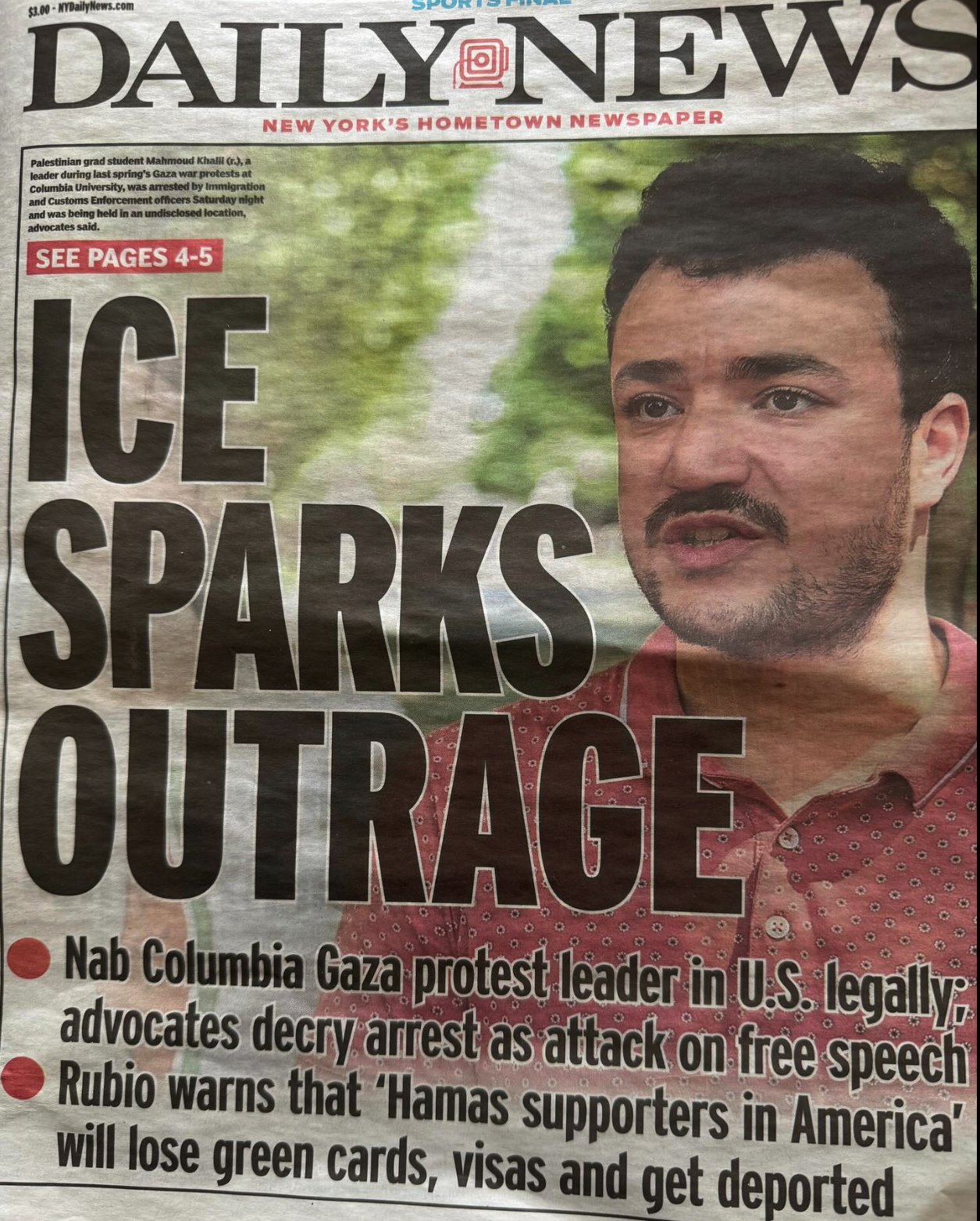
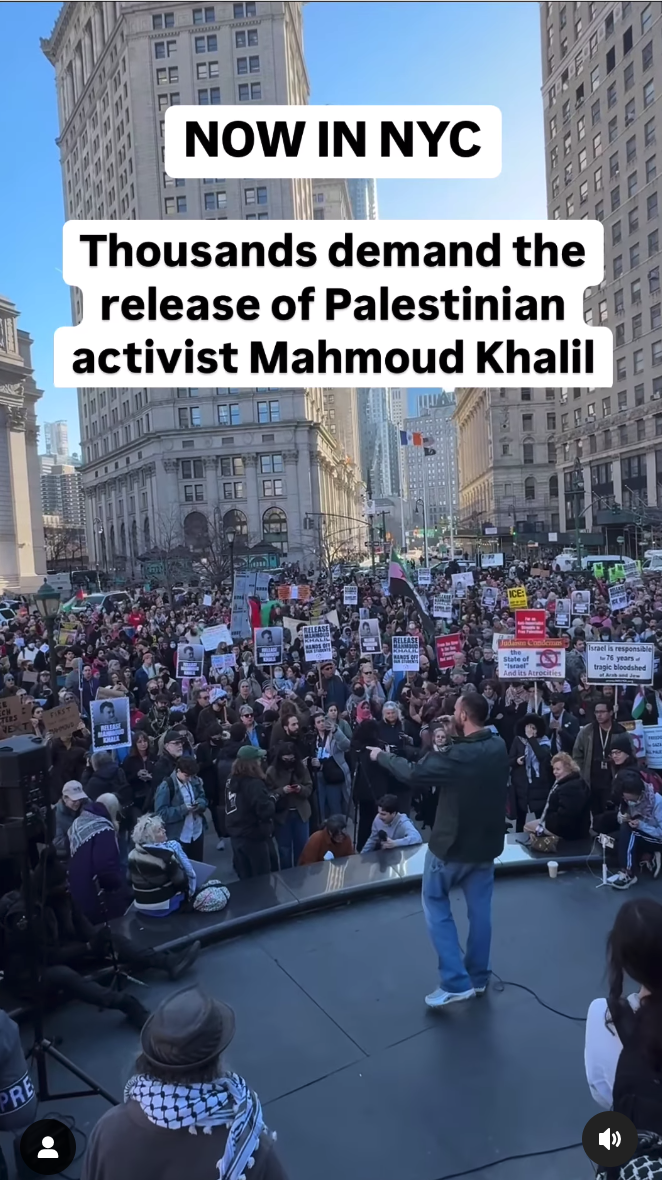
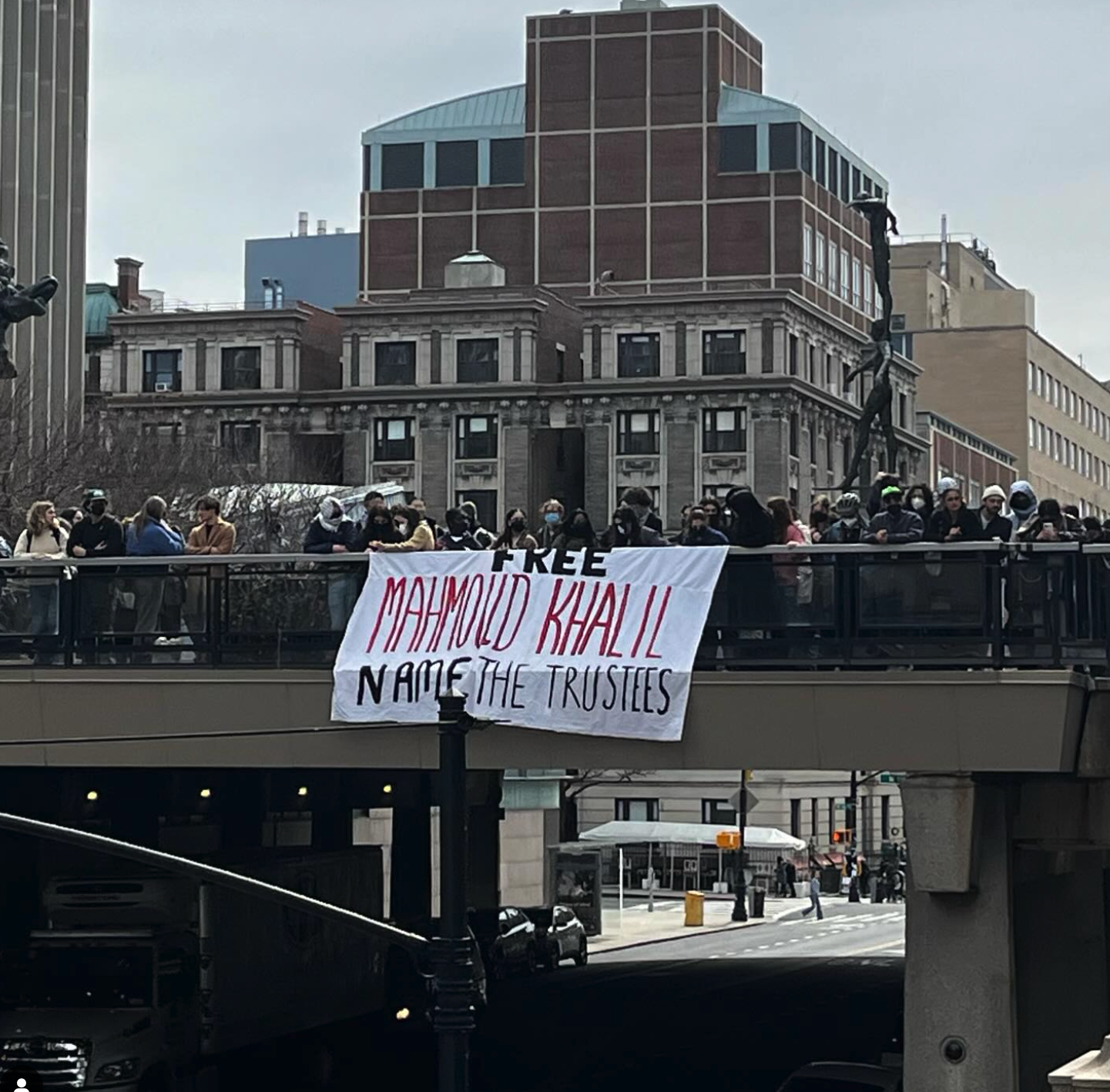
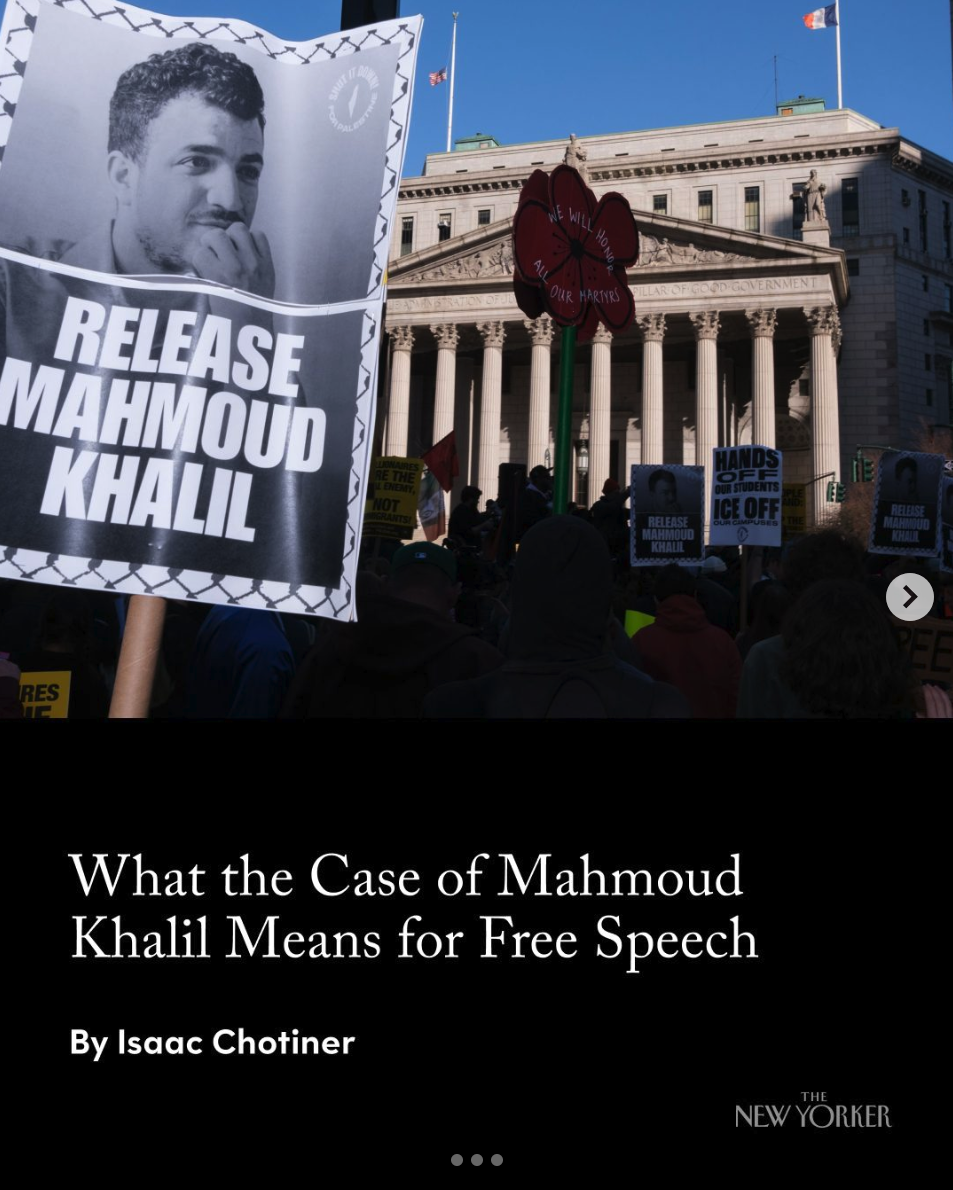
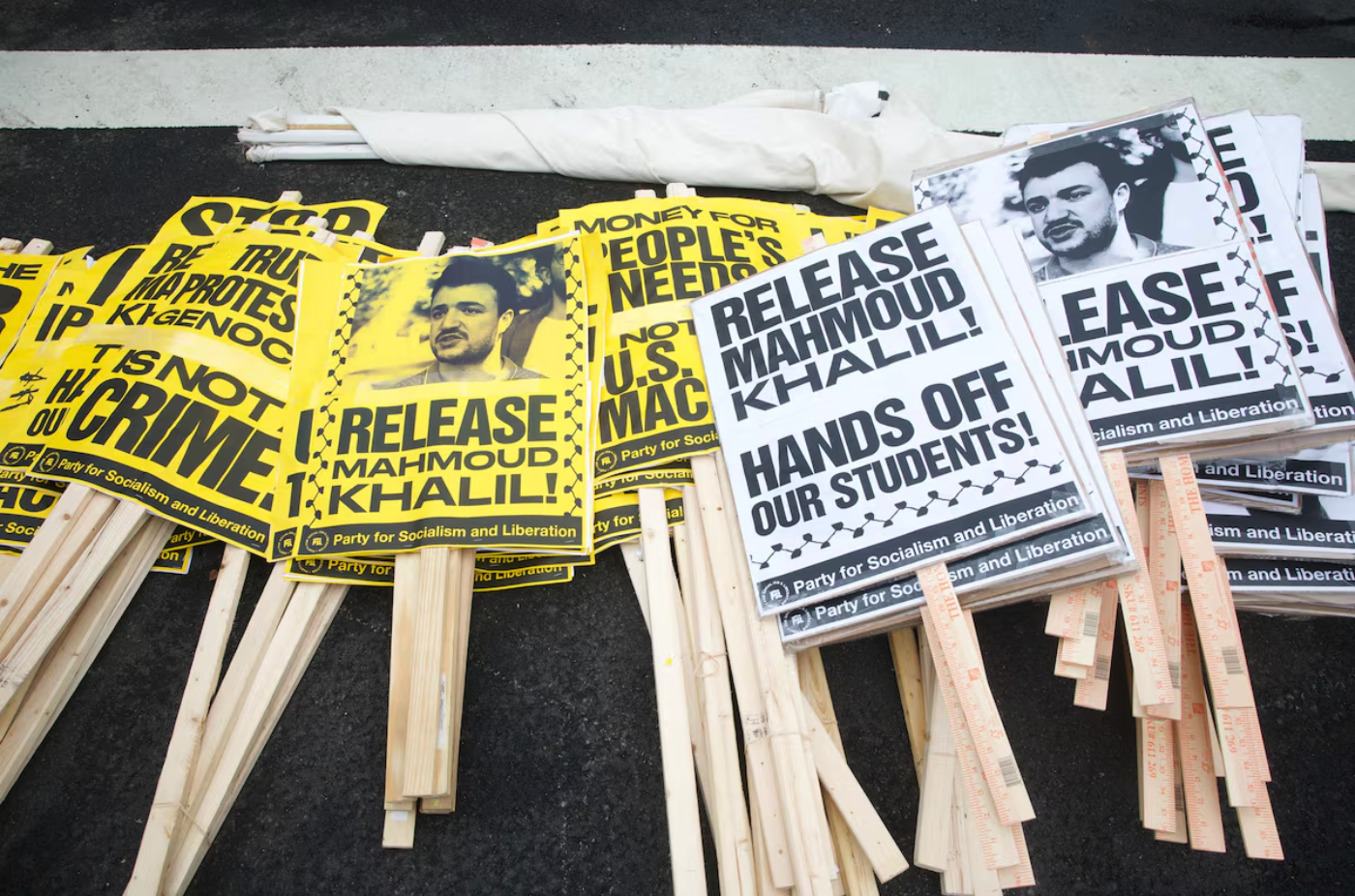
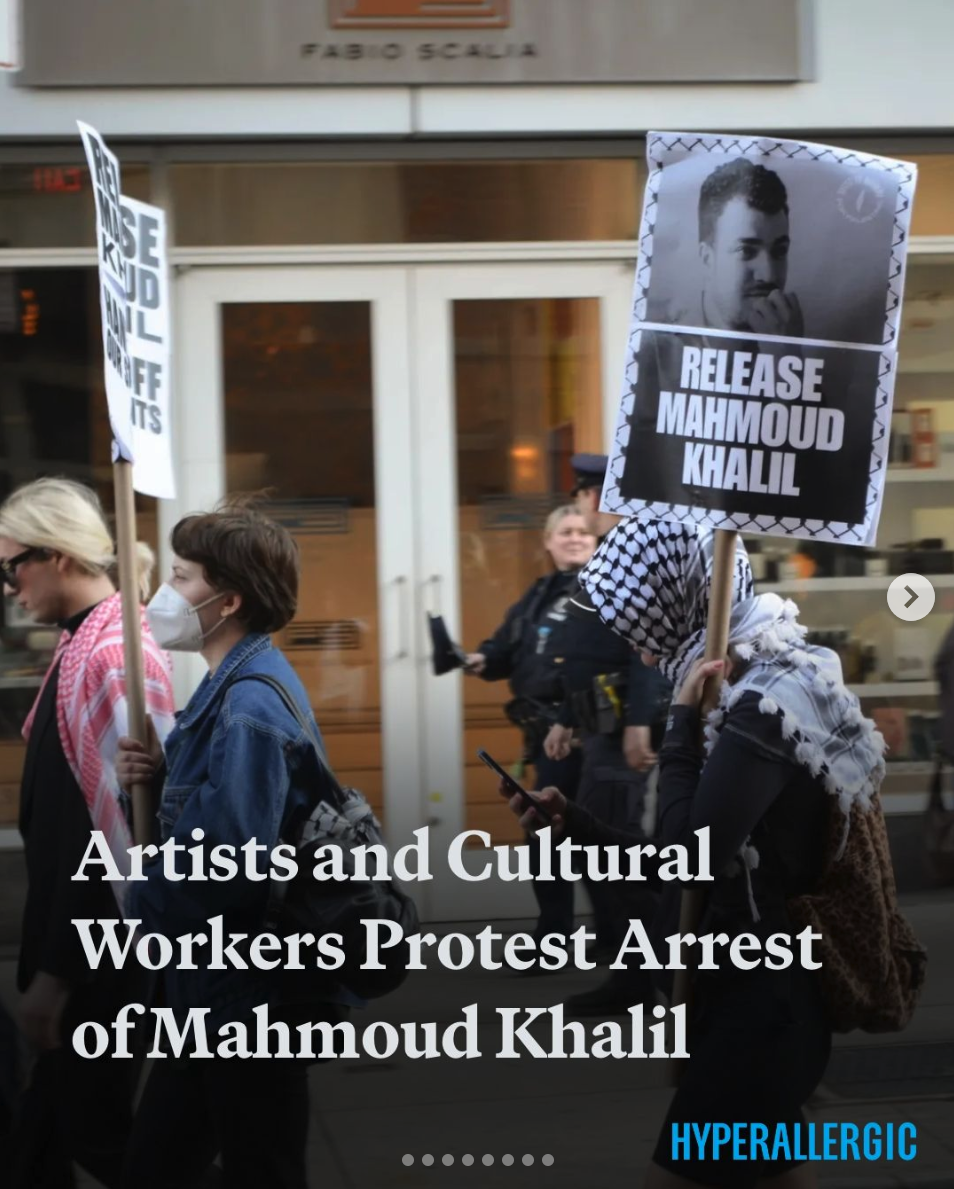
Then came the news reports and media, statements from human rights organisations, and thousands of protesters on the streets. It was incredibly moving but also slightly dystopian to see thousands of people take to the streets in support of Mahmoud. My husband and I couldn’t believe what was happening. Celebrities like Macklemore, Susan Sarandon, and Michael Moore used their platforms to speak up. In Congress though, a group of progressive members who circulated a letter condemning Mahmoud’s deportation could get only 14 signatures – perhaps indicative of the broader climate of fear around speaking out.




At stake
“The Trump administration is targeting me as part of a broader strategy to suppress dissent. Visa-holders, green-card carriers, and citizens alike will all be targeted for their political beliefs. In the weeks ahead, students, advocates, and elected officials must unite to defend the right to protest for Palestine. At stake are not just our voices, but the fundamental civil liberties of all.”
– Mahmoud Khalil, excerpt from a letter dictated from ICE detention, March 18, 2025
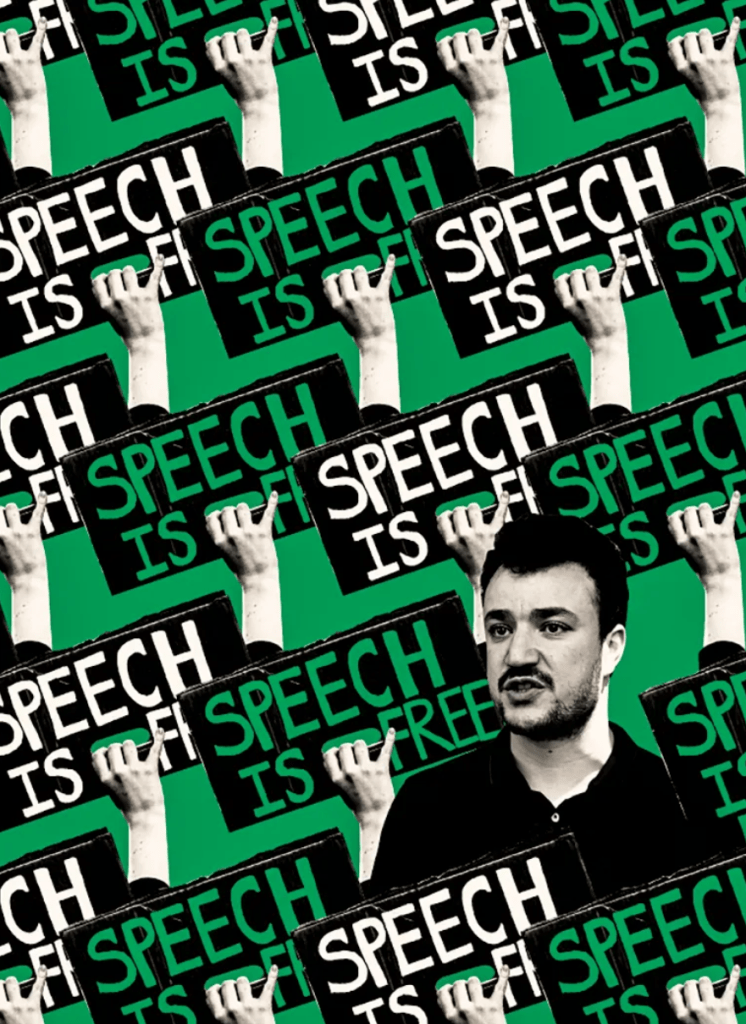
Mahmoud’s case is a watershed one. At its heart lie fundamental rights—freedom of speech, expression, and peaceful protest—guaranteed under the First Amendment of the U.S. Constitution. But it also marks a chilling departure from due process, a cornerstone of American law enshrined in the Fifth and Fourteenth Amendments.
From the outset, it became clear that Mahmoud’s detention was something of a test case—an early move in what appears to be a broader strategy by the Trump administration. Since then, universities and media outlets have reported that roughly 800 international students have had their visas revoked, often without explanation. Alarmingly, a handful of them—like Mahmoud—are lawful permanent residents, holding green cards. In an even more extreme escalation, some American citizens have reportedly been arrested or even deported under the administration’s sweeping new policies. These developments raise urgent and unsettling questions about whether the rule of law, as traditionally understood in the United States, is being systematically eroded.
Mahmoud’s case is also part of a broader, targeted attack by the White House on universities. On March 7, the day before Mahmoud’s arrest, the administration announced it would be withdrawing approximately $400 million in federal funding and contracts from Columbia University, citing “continued inaction in the face of persistent harassment of Jewish students.” Six days later, on March 13, the administration sent a letter to Columbia’s officials, outlining nine demands. These included the creation of an internal security force with the power to remove or arrest individuals from campus; the adoption of a definition of antisemitism that conflates criticism of Zionist policies with antisemitism; and the surrendering of oversight of the Middle Eastern, South Asian, and African Studies Department. Columbia University capitulated to the demands, but as of now, the $400 million in funding has not been restored. In the weeks since, at least 13 other elite universities across the U.S. have been targeted with similar funding cuts or threats.
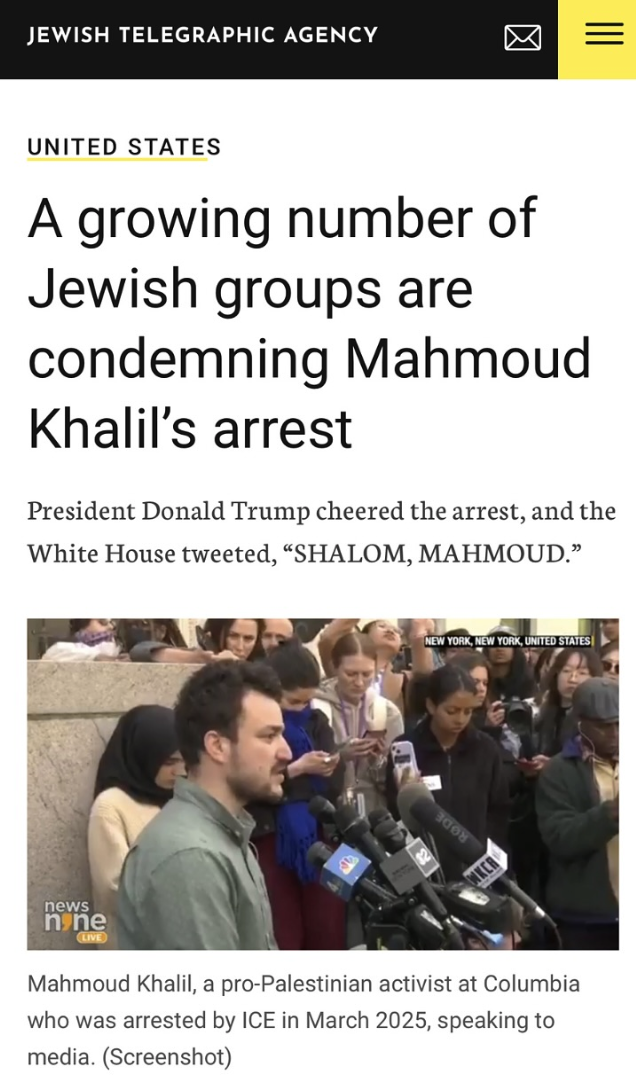
Contrary to Trump’s claims, these draconian federal actions may actually pose a threat to Jewish safety in the U.S as well. A coalition of of ten organizations representing a broad spectrum of American Jewish life – including three of the four major denominations – issued a joint statement condemning “the exploitation of our community’s real concerns about antisemitism” and rejecting “the false choice between confronting antisemitism and upholding democracy” stating “These actions do not make Jews—or any community—safer. Rather, they only make us less safe“.
The credibility of the administration’s stated concern for Jewish safety is further undermined by the behavior of some of its most visible allies. Figures like Elon Musk, who was appointed by Trump to a formal advisory role in the White House, have amplified antisemitic conspiracy theories and even echoed Nazi imagery—at one point photographed giving a Nazi-style salute at Trump’s inauguration rally. Such actions raise serious questions about whether the current wave of repression is truly about combating antisemitism, or whether it is a politically convenient pretext.
A human tale
“I see in my circumstances similarities to Israel’s use of administrative detention — imprisonment without trial or charge — to strip Palestinians of their rights. I think of our friend Omar Khatib, who was incarcerated without charge or trial by Israel as he returned home from travel. I think of Gaza hospital director and pediatrician Dr. Hussam Abu Safiya, who was taken captive by the Israeli military on December 27 and remains in an Israeli torture camp today. For Palestinians, imprisonment without due process is commonplace.”
– Mahmoud Khalil, excerpt from a letter dictated from ICE detention, March 18, 2025
As the poet Mosab Abu Toha—recent winner of the 2025 Pulitzer Prize for Commentary—put it in a recent interview, “Our tales are not only Palestinian tales, it is a human tale, of loss after loss, after loss; while the world is watching us.”
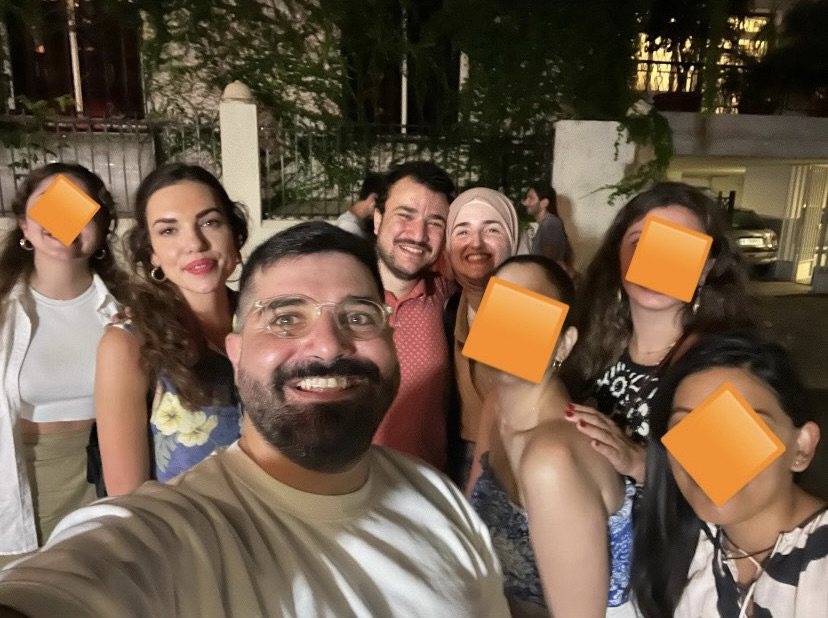
Mahmoud’s case has become a symbol of much broader political struggles—but beyond all the spectacle, the headlines and hashtags, there’s a real person at the centre. He’s a devoted husband who was excited to welcome his first child into the world. He’s somebody’s cherished son. He’s a thoughtful, active, and deeply caring member of his community. He’s also our friend—someone we came to know in Beirut, always up for a good time and quick to bring warmth to any gathering. And he just happened to be born in a time and place marked by immense hardship.
In the video below, he shares a little of his story—in his own words.
Recent updates
“Knowing fully that this moment transcends my individual circumstances, I hope nonetheless to be free to witness the birth of my first-born child.”
– Mahmoud Khalil, excerpt from a letter dictated from ICE detention, March 18, 2025
Since Mahmoud’s arrest, ICE has attempted to justify its actions by invoking a rarely-used Cold War-era immigration law that empowers the Secretary of State to revoke a person’s legal status if their presence is deemed likely to cause “adverse foreign policy consequences”. “The allegation here is not that he was breaking the law,” a White House official told the Free Press. A vague statement from the Department of Homeland Security claimed Khalil had “led activities aligned to Hamas,” —language that deliberately blurs the line between legitimate political protest and support for terrorism, and dangerously conflates criticism of Israeli policy with antisemitism. ICE later added accusations of misrepresentation on his green card application—claiming he hadn’t made clear the full extent of his diplomatic work, nor his involvement in student activism at Columbia.
His legal team, backed by the American Civil Liberties Union, says this is politically motivated. It’s not just about immigration; it’s a civil liberties case with far-reaching implications. In March, a federal judge in New York temporarily halted his deportation. But in April, a Louisiana immigration judge ruled that Mahmoud could still be removed “to Syria, Algeria, or some country” under that vague political provision. As friends gathered in the courtroom—many of them Jewish, many of them crying—Mahmoud turned to them and smiled, mouthing, “It will be OK.”
He’s still being held at LaSalle Detention Center, under one of the harshest judicial circuits in the country. It’s been two months now. Most heartbreaking of all, Noor has now given birth to their baby—alone. Perhaps the cruelest part of all this is that Mahmoud remains behind bars, separated from his wife and newborn at a moment that should have been filled with joy.
Take Action
Thank you for reading. If you’re moved by Mahmoud and Noor’s story, please consider taking one of the actions below to support them—and to stand up for the rights and principles at the heart of Mahmoud’s case.
✍️ Sign Petitions
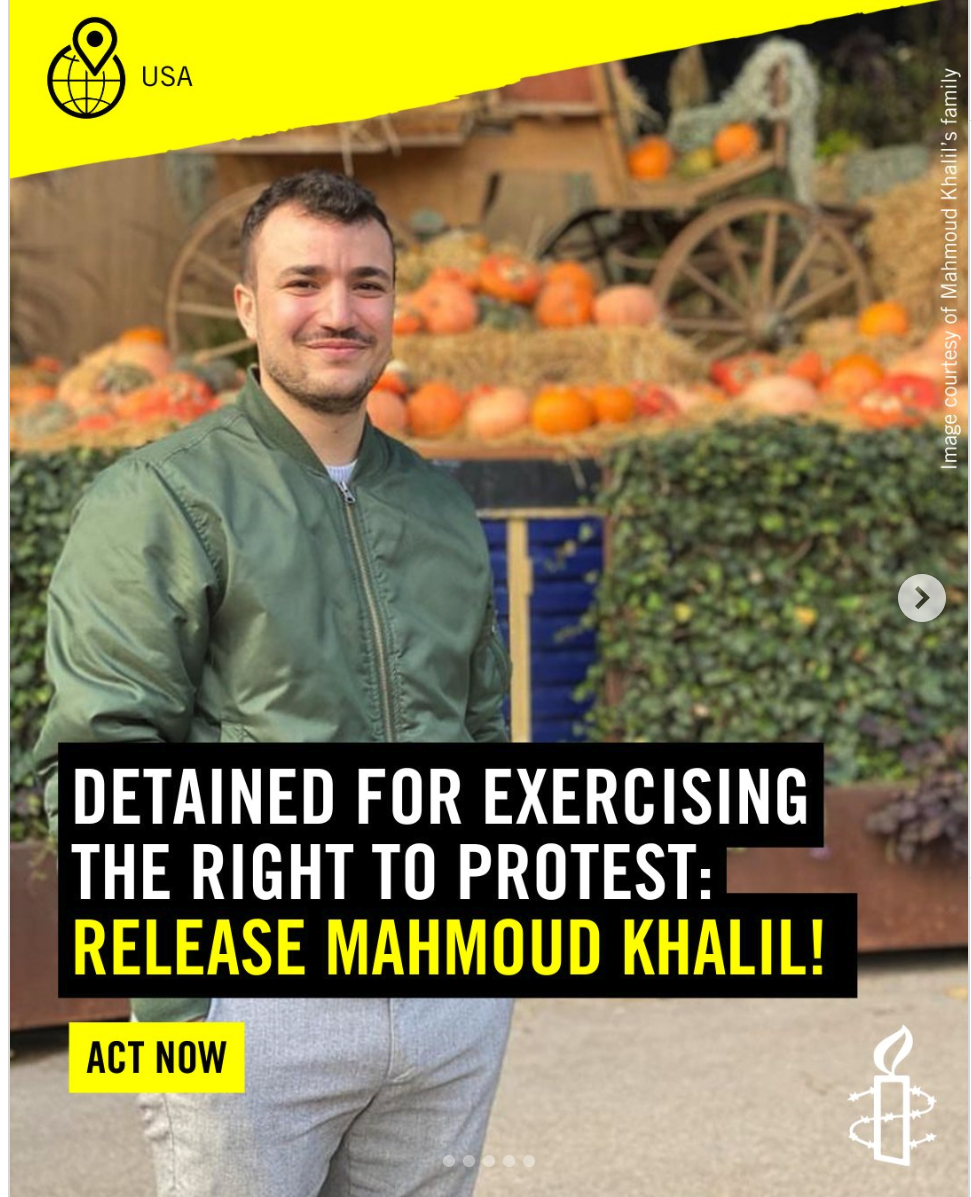
- Amnesty International: Demand Mahmoud’s immediate release and an end to his arbitrary detention. Amnesty InternationalLeft Voice
- ACLU Action Campaign: Urge the U.S. government to stop targeting activists for their political beliefs. American Civil Liberties Union
- Action Network: Send a letter to DHS demanding Mahmoud’s release and a reversal of Columbia’s cooperation with ICE. Action Network –Left Voice+1Action Network -+1
- CAIR Advocacy Alert: Tell your representatives to oppose this political retaliation. action.cair.comaction.cair.com
💸 Donate to His Legal Defense
- Justice for Mahmoud Khalil Fund: Help cover legal fees and support his family during this difficult time. Chuffed.org
🧑⚖️ Support Legal and Civil Rights Efforts
- Read and share Mahmoud’s letter from detention, published by the ACLU, to understand his perspective and the broader implications of his case. American Civil Liberties Union
 The Beirut Bulbul.